

UMBAL “Tsaritsa Yoanna - ISUL” - service quality across the whole hospital
A university hospital where every unit has its own QR code. Patients rate the service from staff in seconds, and management sees the result by unit in real time.
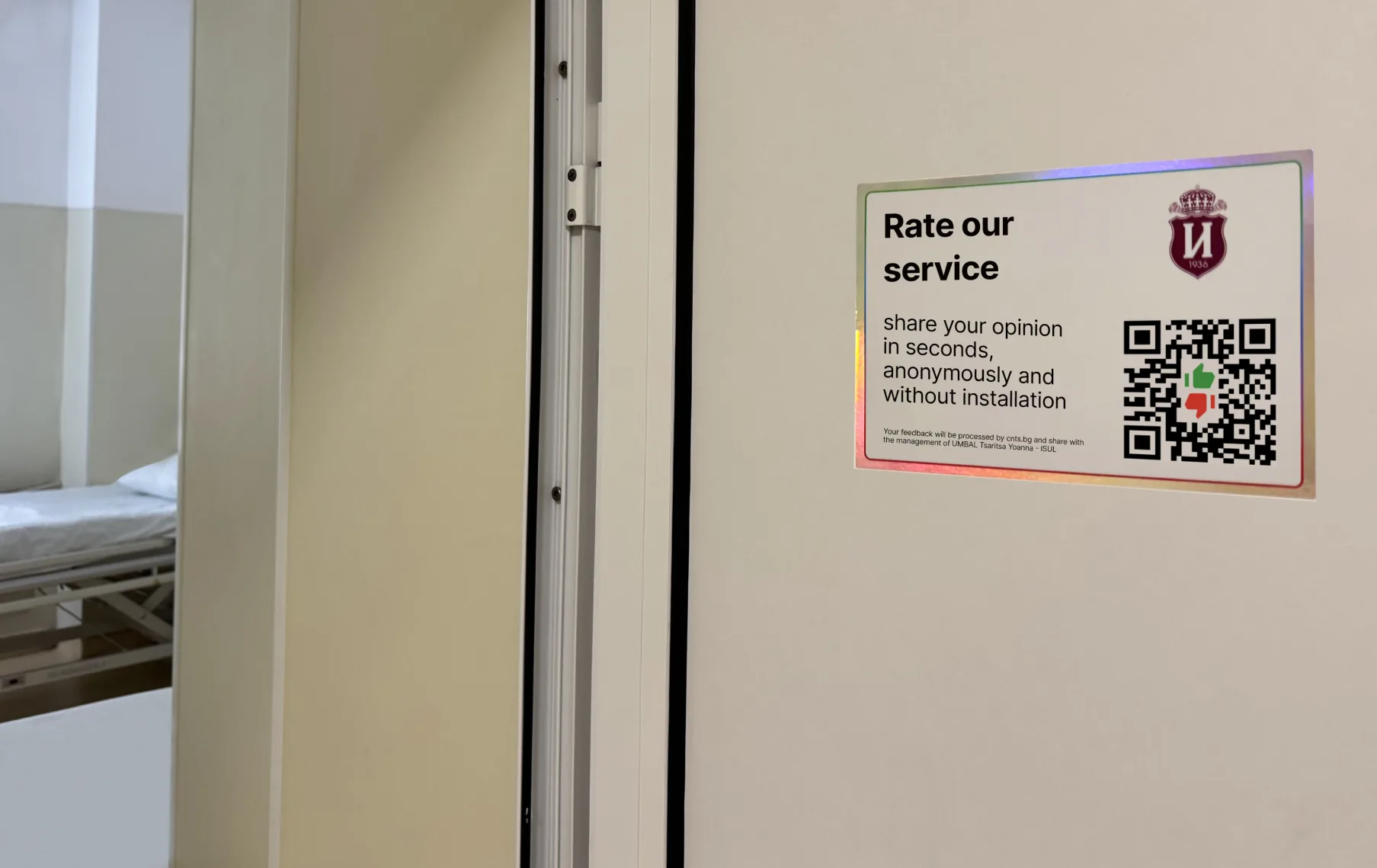
Every unit in the hospital has its own QR code for rating service
The Challenge
A university hospital like ISUL admits patients across dozens of consulting rooms, examination and procedure rooms and inpatient wards at the same time. The way staff treat a patient varies from unit to unit and from shift to shift, but management has no single measure covering the whole hospital.
The complaint book and paper forms give fragmented signals, and they arrive late. A patient who leaves dissatisfied rarely says so on the spot - more often they stay silent, or post publicly once it is too late to respond.
The Solution
kazva.bg covers the entire hospital - consulting rooms, examination and procedure rooms, inpatient wards and administrative desks. Every unit has its own QR code, and the patient rates anonymously in about 30 seconds, with no app and no registration.
What is being measured is the same everywhere in the hospital - how staff served the patient. ISUL runs four questionnaire types - inpatient, examination, procedure and administrative service - which do not change the subject, only the unit and team the rating belongs to.
Results
ISUL's management has a single measure of service quality that applies across the whole hospital and updates continuously. Because every unit is rated on the same thing, the results are comparable with each other rather than separate, unrelated impressions.
A low rating triggers an automatic notification with the details - where, on which criterion, and what the patient wrote. Problems surface while they can still be solved, and the effect of every change is tracked with the same measure.
How it works
From scan to opinion in 30 seconds
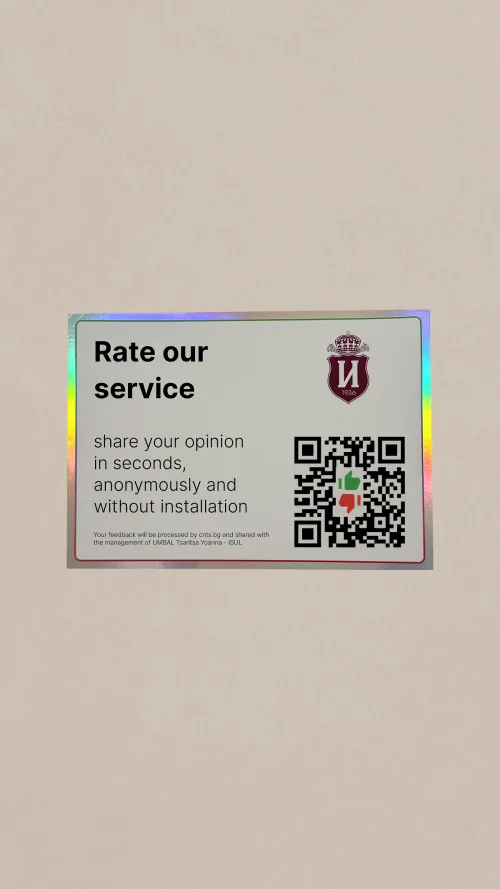
Scans
The QR code in the consulting room, the procedure room or the ward
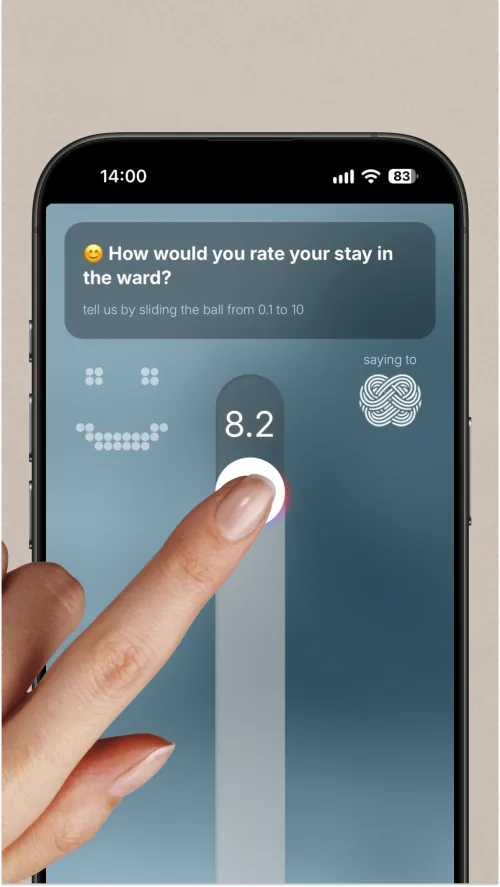
Rates
Anonymously, sliding on a 0.1 to 10 scale
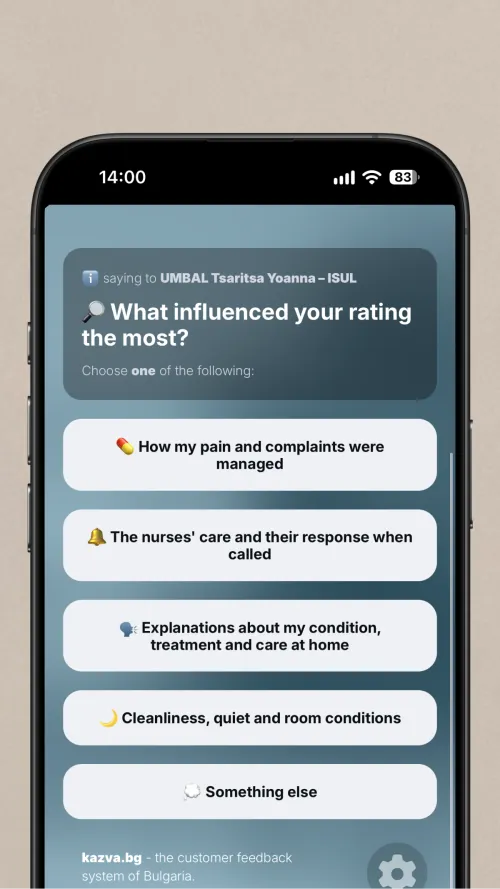
Gives a reason
Selects the main factor behind their rating
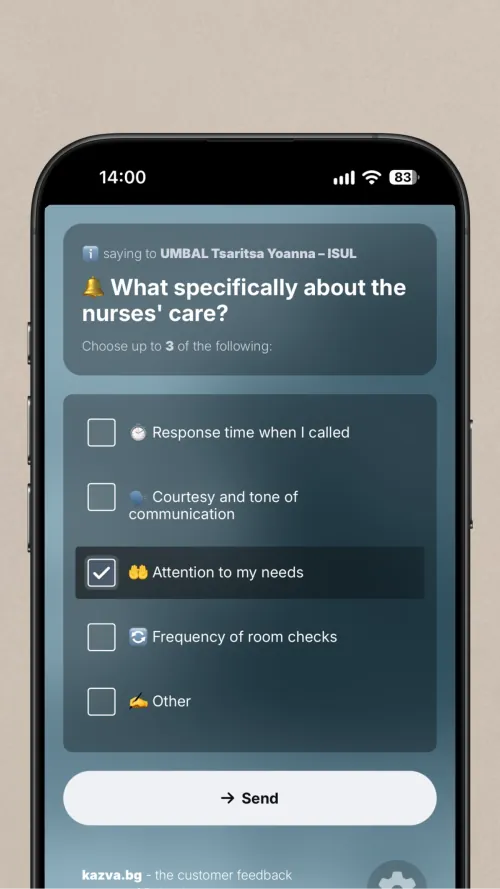
Specifies
A detailed question about the chosen category
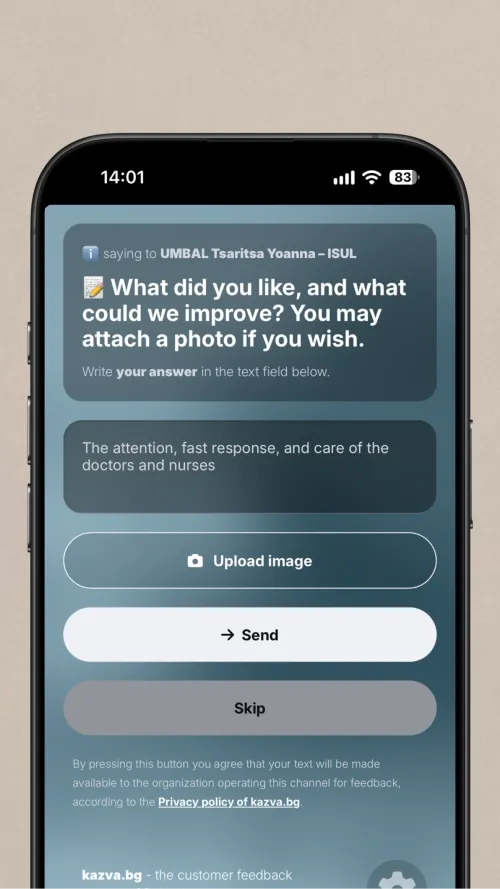
Tells us more
A free-text comment, with a photo if they wish
Try it yourself
This is exactly what a patient at ISUL sees. It takes 30 seconds - no app, fully anonymous.
- In seconds

- Anonymous
- No installation
What you get
What ISUL measures
Staff attitude
The attitude, communication and responsiveness of the medical and administrative teams - separately for every unit.
Waiting time
How long the patient waited - tracked by department, location and period.
A QR code in every unit
Consulting rooms, examination and procedure rooms, inpatient wards and desks. Every unit is rated on its own, against the same criterion.
Service, not a medical assessment
The questionnaires do not assess treatment or clinical decisions. The only thing measured is how staff served the patient.
Automatic reports
Aggregated results by department, unit and period - with no manual processing of forms.
Automatic notifications
On a low rating, management receives a notification with the details - unit, criterion and the patient's comment.
Transformation
Current model
- ✕ Service is judged by impression and by complaints
- ✕ Paper forms are processed slowly and rarely
- ✕ A problem in one department stays invisible to management
- ✕ Different units cannot be compared with each other
With kazva.bg
- ✓ A QR code in every unit of the hospital
- ✓ Four questionnaire types, tied to the specific unit
- ✓ An automatic notification on a low rating, with the details
- ✓ One measure of service, trackable over time
The questionnaires
Four units, one and the same subject of assessment
Inpatient
Service from staff during an inpatient stay - attitude, responsiveness and communication with the patient.
Examination
Service in the consulting room during an outpatient examination - how staff treated the patient, not how the examination itself went.
Procedure
Service around procedures and treatments - the team's attitude and attentiveness towards the patient.
Administration
Service at reception and the desks - how informative, responsive and courteous the staff were.
All four questionnaires measure the same thing - how well staff served the patient. The type does not change what is assessed, only the unit the rating belongs to, so a result can be traced to a specific team. That keeps ratings from across the hospital comparable with each other.
The patient journey
Feedback from every unit along the patient journey
A patient passes through several different units of the hospital. Each one carries a QR code with the matching questionnaire, so the service rating belongs to that specific unit rather than to the hospital in general.
Arrival
The patient comes in for an examination, a procedure or an inpatient stay
Reception → feedback
Rates the attitude and responsiveness of the desk staff
Consulting room → feedback
Rates the attitude of staff in the room, not the examination itself
Procedure room → feedback
Rates the team's attitude and attentiveness around the procedure
Inpatient ward → feedback
Rates the service from staff during the stay
Data
Management sees the results by unit and criterion in real time
Gallery
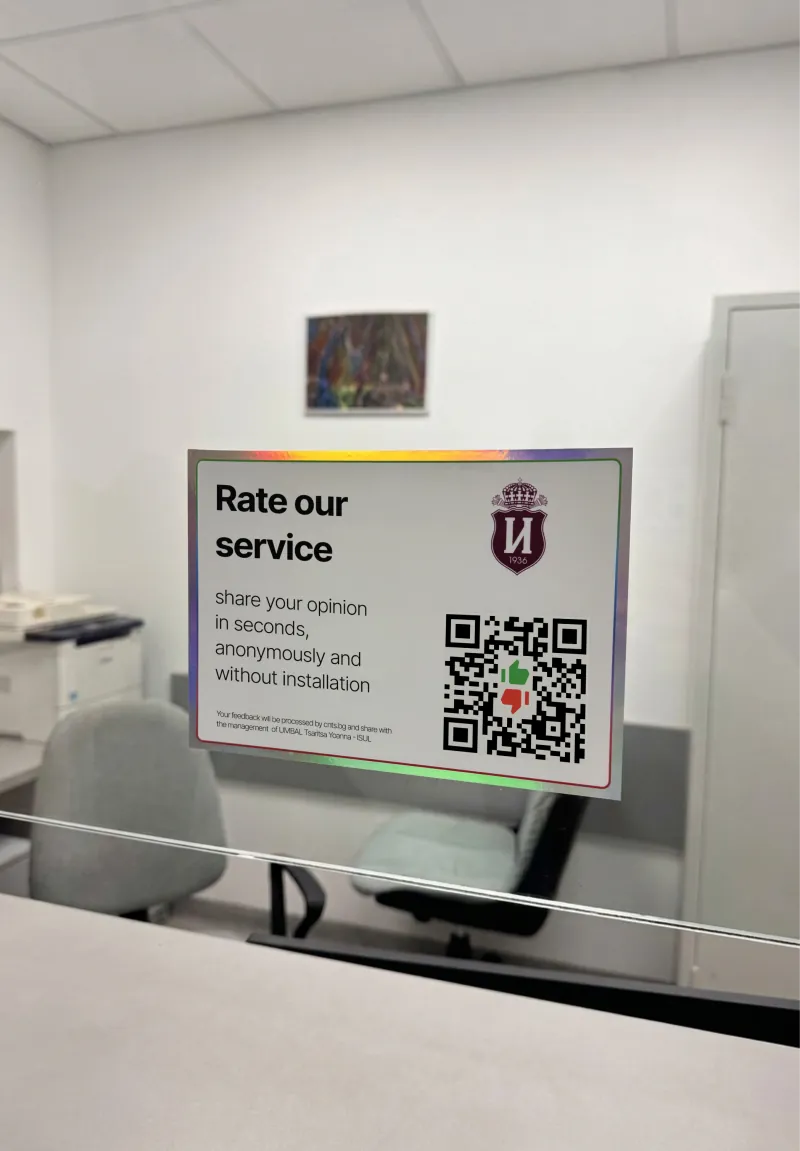
Reception
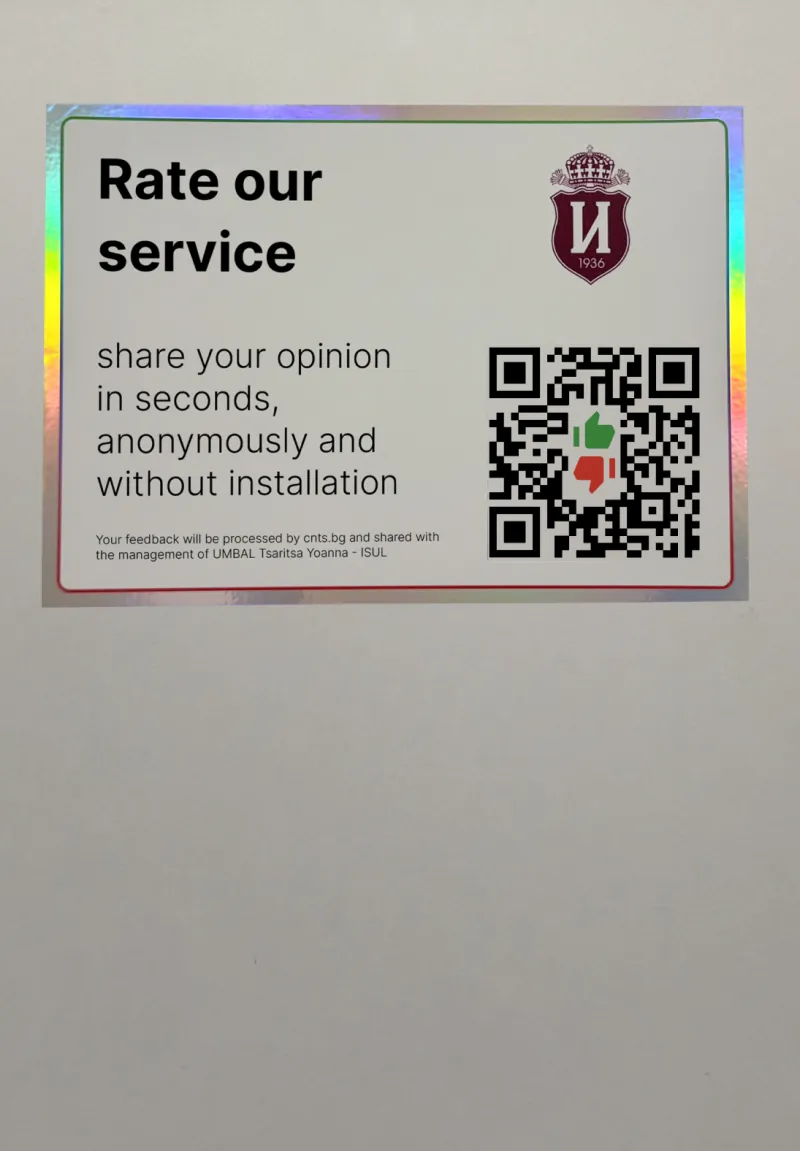
Consulting room
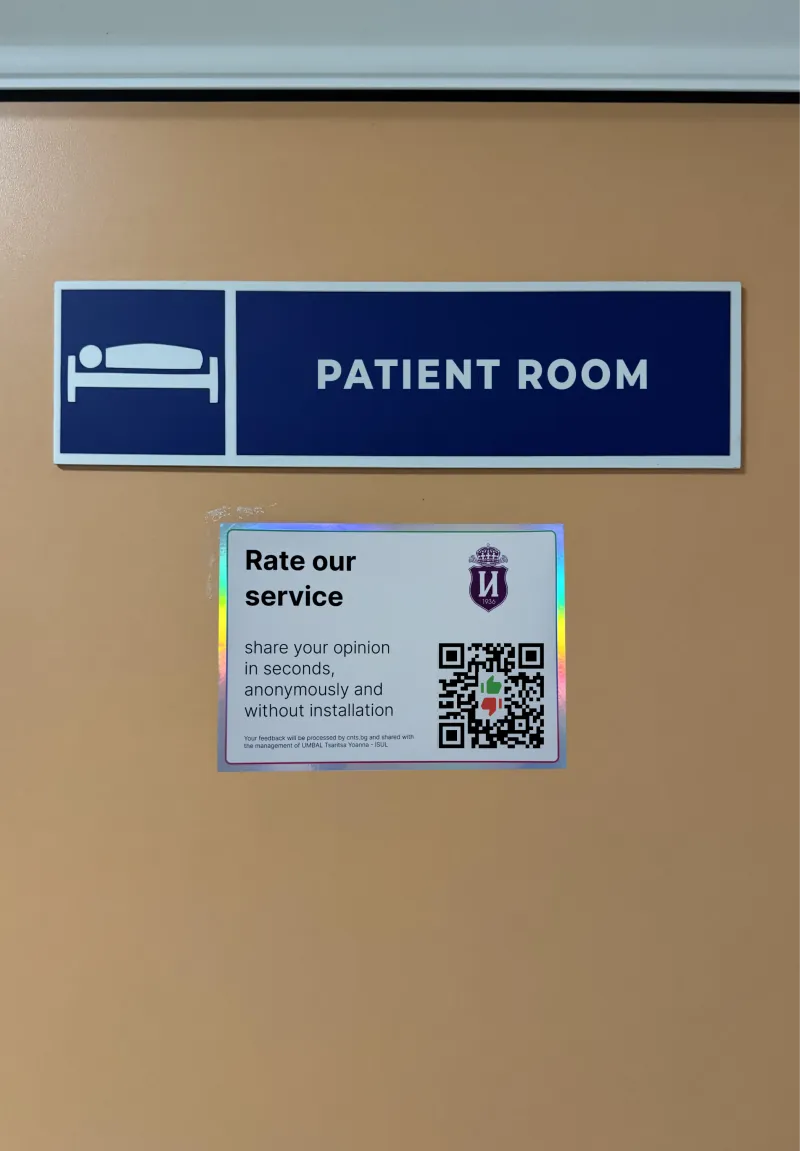
Hospital ward
Service quality becomes measurable
When every unit in the hospital is rated on the same thing - how staff served the patient - service stops being a matter of impression. Management sees which teams are doing well and which are not, and every change is tracked with the same measure that surfaced the problem.
Get in touch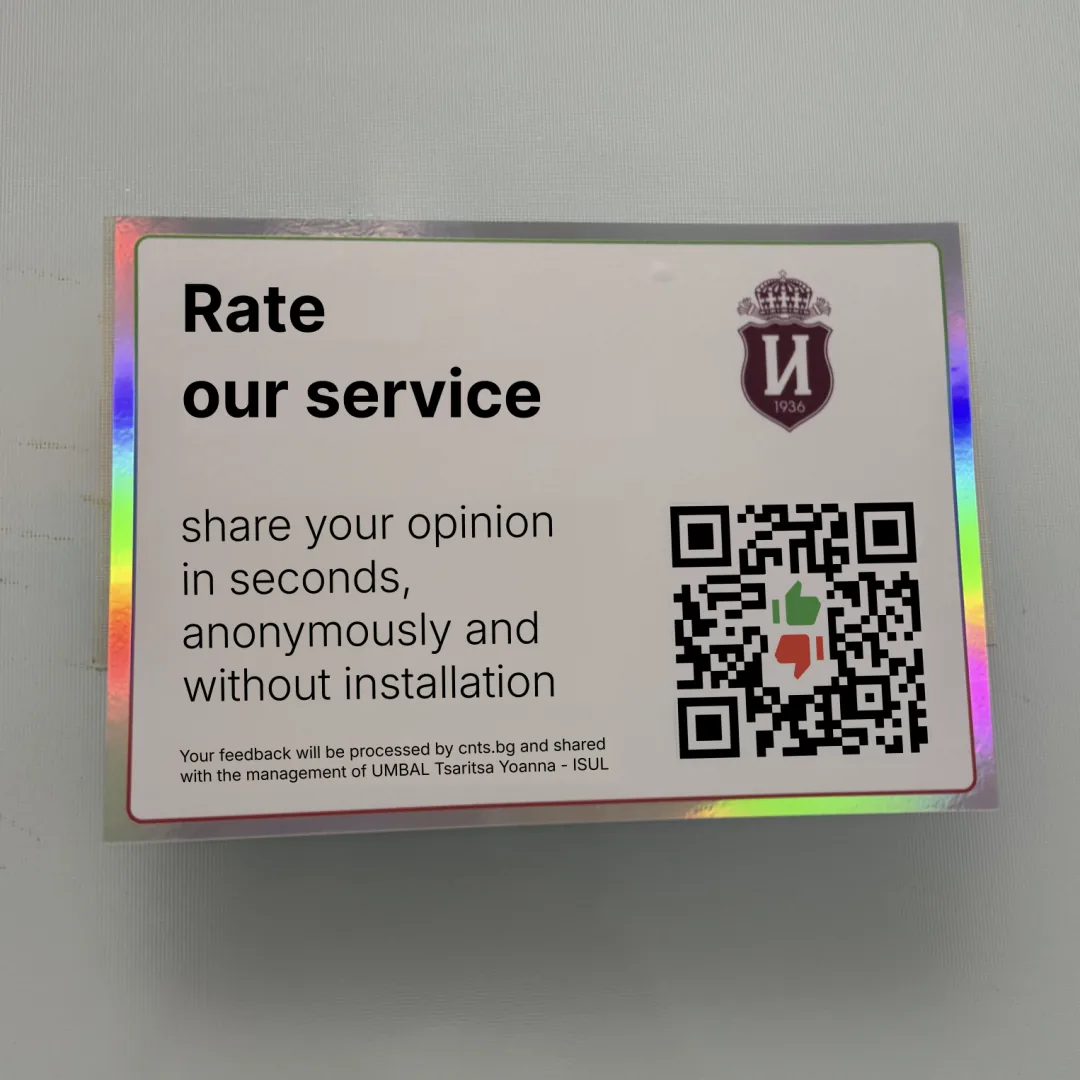
Rollout
Three steps to covering the whole hospital
Scope and questionnaires
We map the hospital's units and point the four questionnaire types at them - inpatient, examination, procedure and administration.
Materials and setup
We provide the QR code materials for every unit, and the hospital puts them in place. We configure the dashboard, the notifications and the reports.
First results
Service ratings by unit in real time, with specific comments and an automatic notification on a low score.
Comparing the approaches
| kazva.bg | Complaint book / paper forms | |
|---|---|---|
| Data | Real time | Weeks to months |
| Participation | High - 30 seconds, anonymous | Low - treated as a formality |
| Coverage | The whole hospital, every unit | Isolated points, occasional |
| Detail | By department, unit, criterion and period | General impressions |
| Response | Automatic notification when a problem appears | Response after escalation |
More case studies
All 4 airports in Bulgaria - on one platform
Passenger feedback from 4 national airports. Real-time notifications on low ratings.
HR / Employee ExperienceEmployee feedback - every day, not once a year
QR code at the workplace. Anonymous rating in 30 seconds. HR sees results immediately.
Finance / HRBORICA - 29 offices, one platform
29 offices, one dashboard. Customer ratings by location and period.
Want to measure your service quality?
See how a QR code in every unit turns a patient's view of the service into a measurable indicator.
Get in touch